How To Choose A Sustainable Paint Brand: A Helpful Guide
Most sustainable paint claims fall apart as soon as you ask a follow up question. “Eco Friendly” as a label tells you very little about what’s inside the tin, how it was sourced, made, or what happens to it when you’ve finished. At COAT, as an online brand that only sells directly to our customers, we’re proudly open about sustainability (and certified as such, too, with B Corp and Climate Positive verified accreditations).
If you really want paint that’s better for you and the planet, you need to separate the real from the noise. Here’s the sustainability checklist we’d use ourselves (because, we do…):
Start with the ingredients
VOCs are the obvious place to start. These Volatile Organic Compounds are released into the air as the paint dries - most significantly in the first 48 hours but also for weeks after. Look for ‘Low’, ‘Minimal, or ‘Trace’ VOC labels, which means the paint has low levels of these harmful chemicals.
Low VOC paints are common, especially for interior emulsion paints that are water-based. Low VOC means that the paint has under 30g per litre of VOCs, and most retail-ready emulsion paints meet this European standard threshold.
If you want to go further, then ‘Minimal’ or ‘Trace’ VOC paints have even fewer VOCs. To be classed as ‘Minimal VOC’ by the British Coatings Federation the paint must have less than 3g per litre of VOCs. And to be classed as ‘Trace VOC’ the paints must have less than 1g per litre.
One other thing to be clear on - there is no such thing as ‘VOC Free’ or ‘Zero VOC’ paint. The British Coatings Federation holds that it is impossible for a paint product to be 100% free of VOCs, because the supply chain, ingredients list and production process is so complex. So if you see these claims, be cautious.
Demand water-based paints
In days gone by, paints were made primarily with a solvent base. We all probably have memories of that toxic, fresh paint smell that lingered for weeks. But today, water-based formulas are generally the norm, and they are more often low-odour too. Water-based goes hand-in-hand with being low VOC, too.
Look for real, well-established certifications
Unfortunately, anyone can print a green leaf logo on the paint tin and throw the ‘Eco Friendly’ term around. That type of greenwashing is exactly why you need to look for certifications from independent bodies, where companies are assessed against a fixed set of standards when it comes to environmental responsibility.
B Corp certification is one of the clearest signals, because it assesses a company's entire business against rigorous standards for environmental impact, worker treatment, supply chain and overall governance - not just one product line.
Carbon Neutral or Climate Positive certifications are also good ones to look for. These should always be accompanied by a third-party validation, to prove that an external body has conducted the assessment. What’s more, Carbon Neutral can be quite easy for a company to obtain if they only look at Scope 1 emissions - i.e. those that their business is directly responsible for. This ignores supply chains, where much of a company’s impact can happen. Climate Positive, on the other hand, means that the company has looked at their full impact, and chosen to take positive steps such as carbon offsetting to ensure that they balance their carbon impact in a positive way.
At COAT, we’ve taken responsibility for our full impact by formally assessing our footprint across all three scopes and offsetting it through UN Gold Standard projects, contributing significantly more than our emissions value to stay ahead rather than simply level. That's what "Climate Positive" actually means in practice: giving back more than you take.
Ask how the paint is produced, not just what’s in it
The majority of paint sold in the UK is mass produced sold via hardware or branded stores. It is often made in batches, to sit on store shelves as ‘Ready-mix’ paint, waiting for a customer to come in and take it off the shelf. It’s a largely invisible source of industry waste, that goes broadly undiscussed. This model poses a very real risk of overproduction and excess waste of unsold product - versus a made-to-order model like COAT, where each tin is finished on-demand and freshly to order. No overproduction, and no wastage risk.
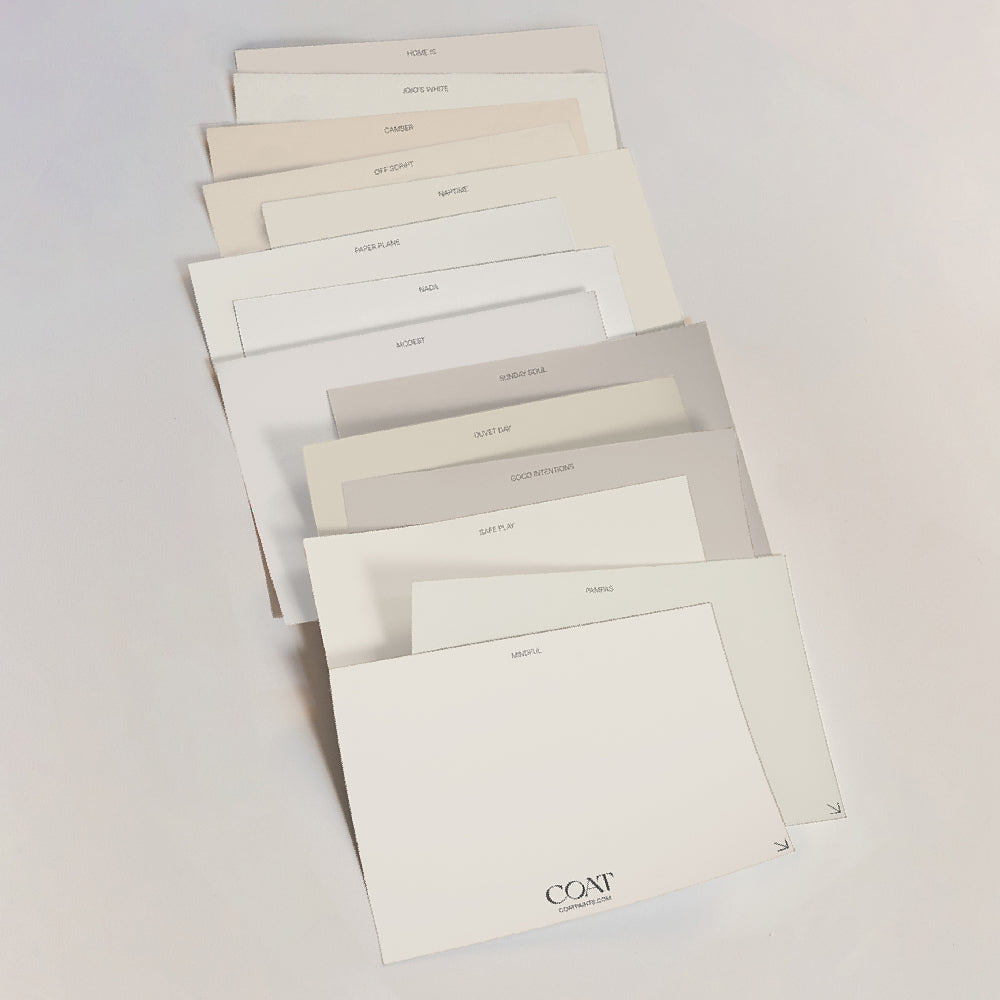
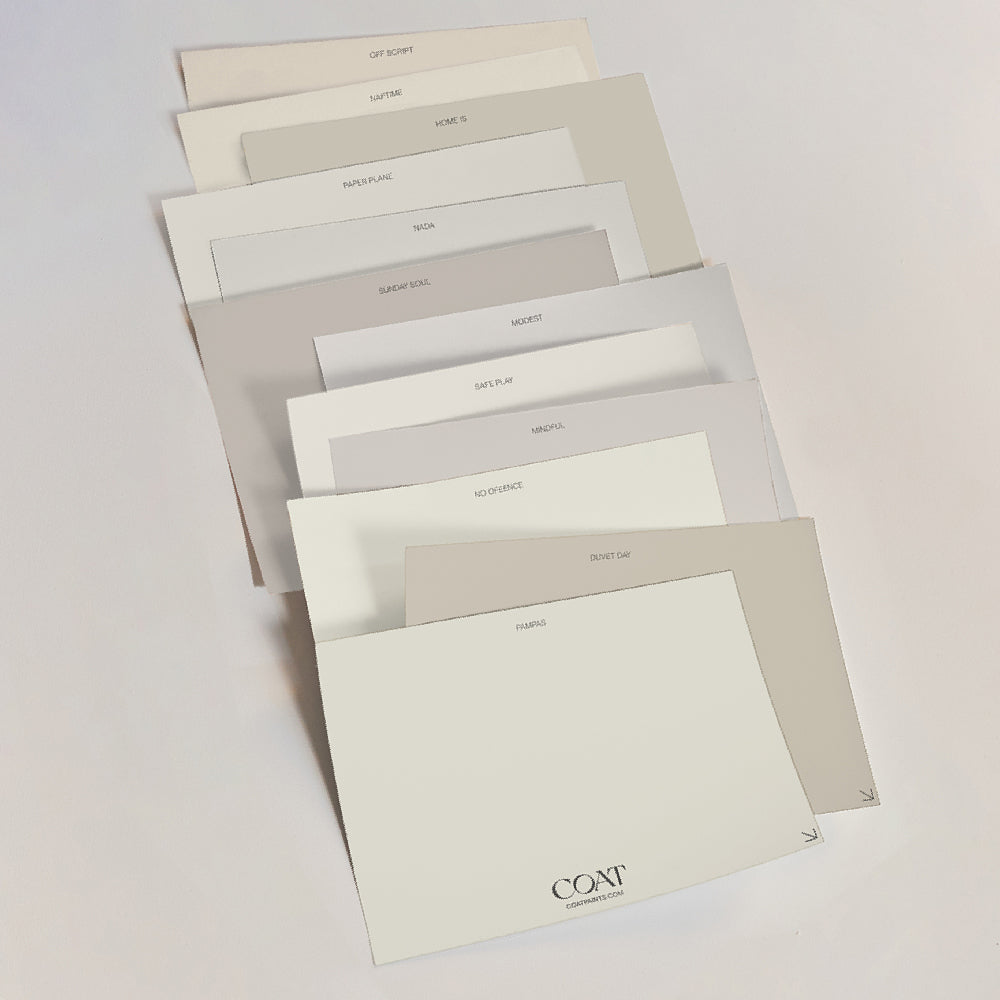
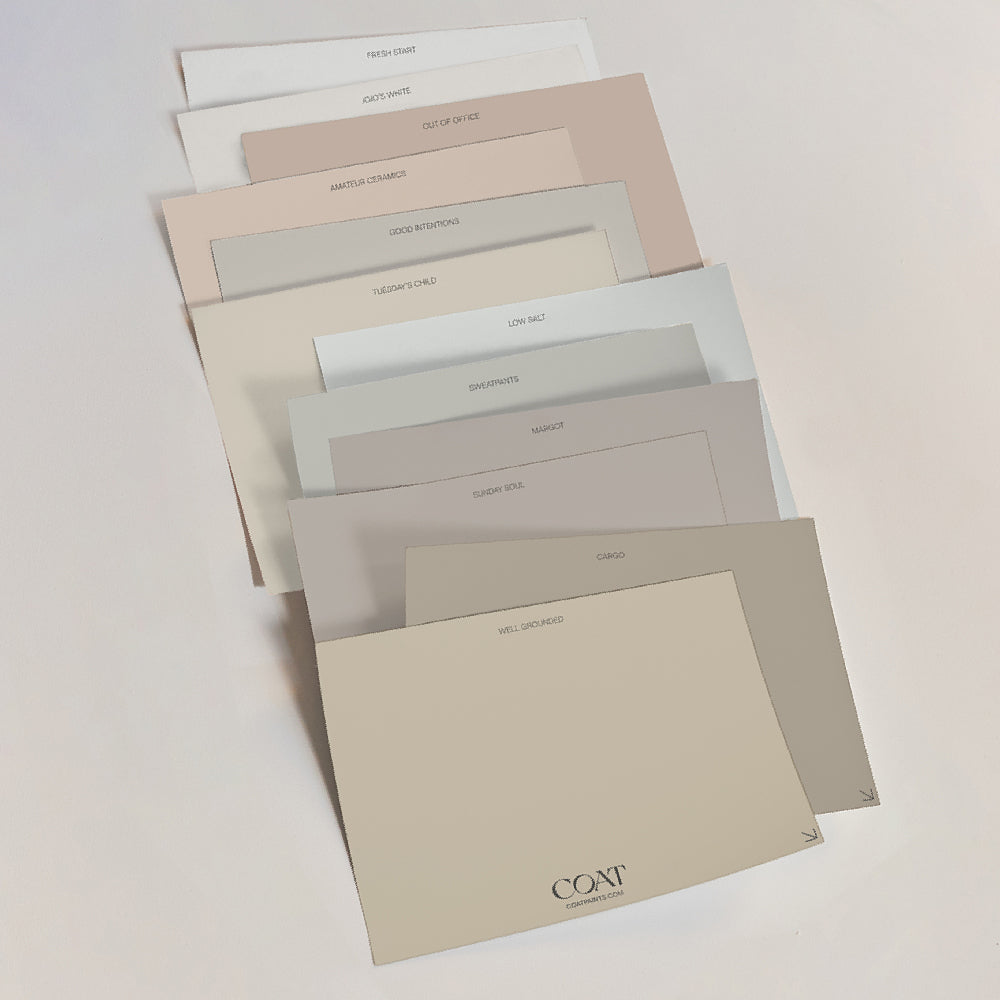
Made-to-order production solves this at the root. Every tin of Mindful or Sunday Soul is mixed freshly once you’ve ordered it, not pulled from a warehouse shelf where it's been sitting for months.
Watch out for language that sounds good, but doesn’t really say anything real
"Eco", "green", "natural", and "conscious" aren't regulated terms - and they can be used a little too often by paint brands. So demand specificity. A brand that's genuinely doing the work will tell you exact VOC levels, name the certifying body, explain its production model, and show you the numbers behind its carbon claims - completely transparently. A brand that's greenwashing will lean on soft language and stop short of anything you could actually verify.
As our Co-Founder and CEO, Rob Abrahams, puts it: "Industry change starts with continuous transparency, not a one-off certification. We're spelling out exactly how we do things at COAT and the decisions we've made, so people know who they're buying from."
The checklist, in short
-
Genuine low-VOC certification, ideally trace VOC
-
Recognised third-party sustainability certification (B Corp, Carbon Neutral or equivalent)
-
A production model that avoids overproduction and unsold stock
-
A carbon footprint assessed across Scope 1 to 3, not just headline ingredients
-
Recyclable packaging and a clear end-of-life or take-back option
-
Specific, checkable claims rather than vague eco language
Frequently asked questions
What does "Climate Positive" mean?
It means the company has measured it’s carbon footprint, verified through an independent assessment, and is offsetting through carbon positive initiatives. Carbon Neutral would be simply neutralising emissions, whereas Climate Positive means offsetting more than you produce.
Is low-VOC paint actually better for indoor air quality?
Yes, low VOC paint is better for the interior environment. VOCs are released after painting, and can be harmful to air quality and humans. Minimal VOC and Trace VOC paints are the best of the bunch when it comes to Low VOC paints, which matters most in poorly ventilated rooms, nurseries and bedrooms.
Is B Corp certification hard to get?
Yes, and it’s meant to be. It also requires regular re-assessment, so it’s a good sign that the company is committed to responsibility when it comes to environment, employees, products and governance in the long term. That’s what makes it a meaningful signal, rather than a generic marketing claim like “Eco Friendly”.
Does made-to-order paint cost more?
No. But at COAT, we do remove the cost of unsold stock and inventory which can get built into the price of paint that’s mass produced. We also have no retailers or stores to pay margins to, so our made-to-order paints are the best quality at the best price.
Publish Date
Author